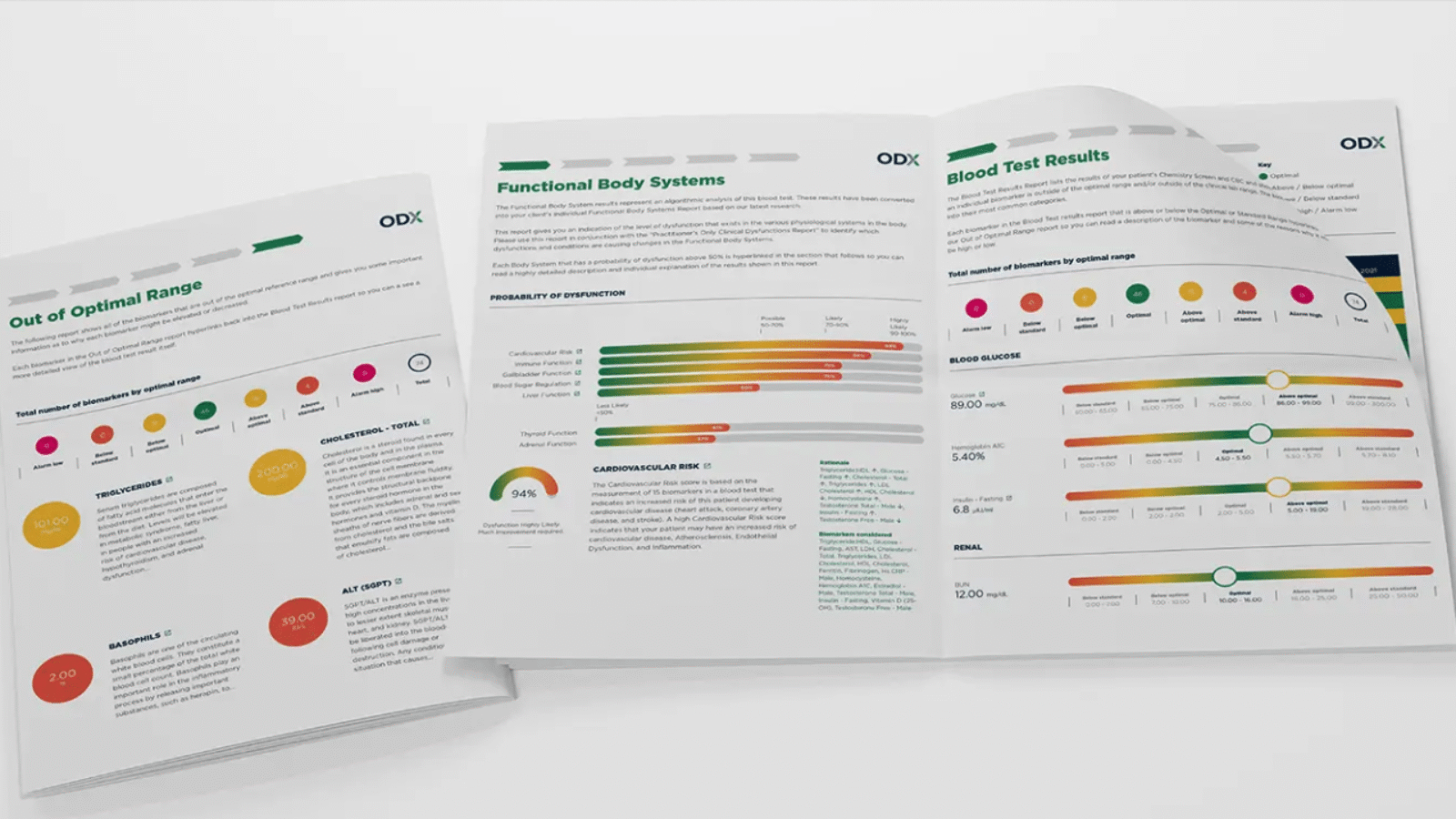
The Difference Between “In Range” and “Optimal”
Traditional lab interpretation focuses on identifying disease.
Functional interpretation focuses on identifying dysfunction before disease develops.
For example:
-
A TSH of 3.8 may be “normal” – but many women feel symptomatic above 2.5.
-
Fasting glucose of 95 may not raise alarms – but paired with elevated insulin, it signals early metabolic strain.
-
Ferritin of 20 may be in range – but insufficient for optimal thyroid conversion and energy.
Numbers do not exist in isolation.
They exist in patterns.
Why Patterns Matter More Than Single Markers
The body compensates.
When one system weakens, another adapts to maintain stability. That compensation can keep labs technically normal for years.
We evaluate:
-
Thyroid conversion (T4 to T3)
-
Reverse T3 patterns
-
Insulin-to-glucose relationships
-
Inflammatory markers in context
-
Estrogen metabolism pathways
-
Progesterone balance
-
Cortisol rhythm (not just a single reading)
It’s not about chasing abnormalities.
It’s about recognizing strain.
The Power of Early Detection
Early metabolic dysfunction often presents as:
-
Subtle weight gain
-
Brain fog
-
Energy dips
-
Mood shifts
-
Sleep disruption
By the time disease is diagnosable, dysfunction has often been present for years.
Functional labs give us the opportunity to intervene early – when change is easier.
Personalization Over Protocol
We do not apply generic plans.
Data guides strategy:
-
Blood sugar instability → targeted nutrition timing
-
Poor thyroid conversion → nutrient + stress support
-
Elevated inflammation → gut and metabolic intervention
-
Hormone imbalance → personalized recalibration
Testing is not about creating fear.
It is about creating clarity.
And clarity creates confidence.
Add a Comment