
pexels-liza-summer-6382642

Healing the Nervous System: The Most Overlooked Key to Energy and Longevity

You Cannot Heal in Survival Mode

The nervous system determines whether your body prioritizes:

  • Repair
  • Reproduction
  • Digestion
  • Fat metabolism
  • ……or Survival

When the body perceives a threat – whether from work stress, sleep deprivation, overtraining, emotional strain, or blood sugar instability – it shifts into sympathetic dominance.

This is commonly known as fight-or-flight.

Short bursts are healthy.
Chronic activation is not.


What Chronic Stress Does to Physiology

Long-term sympathetic activation can:

  • Suppress thyroid conversion
  • Lower progesterone
  • Elevate cortisol
  • Increase insulin
  • Disrupt sleep architecture
  • Reduce digestive efficiency

This creates a cascade.

You may eat well and exercise consistently – but if the nervous system remains dysregulated, healing stalls.


Signs of Nervous System Dysregulation

  • Waking between 2-4am
  • Feeling wired but exhausted
  • Digestive inconsistency
  • Inability to lose weight despite effort
  • Anxiety paired with fatigue
  • Heightened sensitivity to stress

This is not weakness.
It is physiology protecting itself.


Regulation Is the Foundation of Longevity

Longevity is not just about supplements or biohacks.

It is about safety at the cellular level.

When the nervous system shifts into parasympathetic regulation:

  • Digestion improves
  • Hormone signaling stabilizes
  • Sleep deepens
  • Inflammation decreases
  • Energy becomes sustainable

The body heals when it feels safe.


The Integrative Approach to Regulation

At on the GLO, serving Salt Lake City and surrounding areas, nervous system work may include:

  • Sleep architecture optimization
  • Breath pattern retraining
  • Blood sugar stabilization
  • Strength-based training instead of cortisol-spiking overexertion
  • Strategic stress recovery cycles
  • Mind–body techniques

We do not separate mental stress from physical stress.

Your body doesn’t.

Healing the nervous system is not optional.
It is foundational.
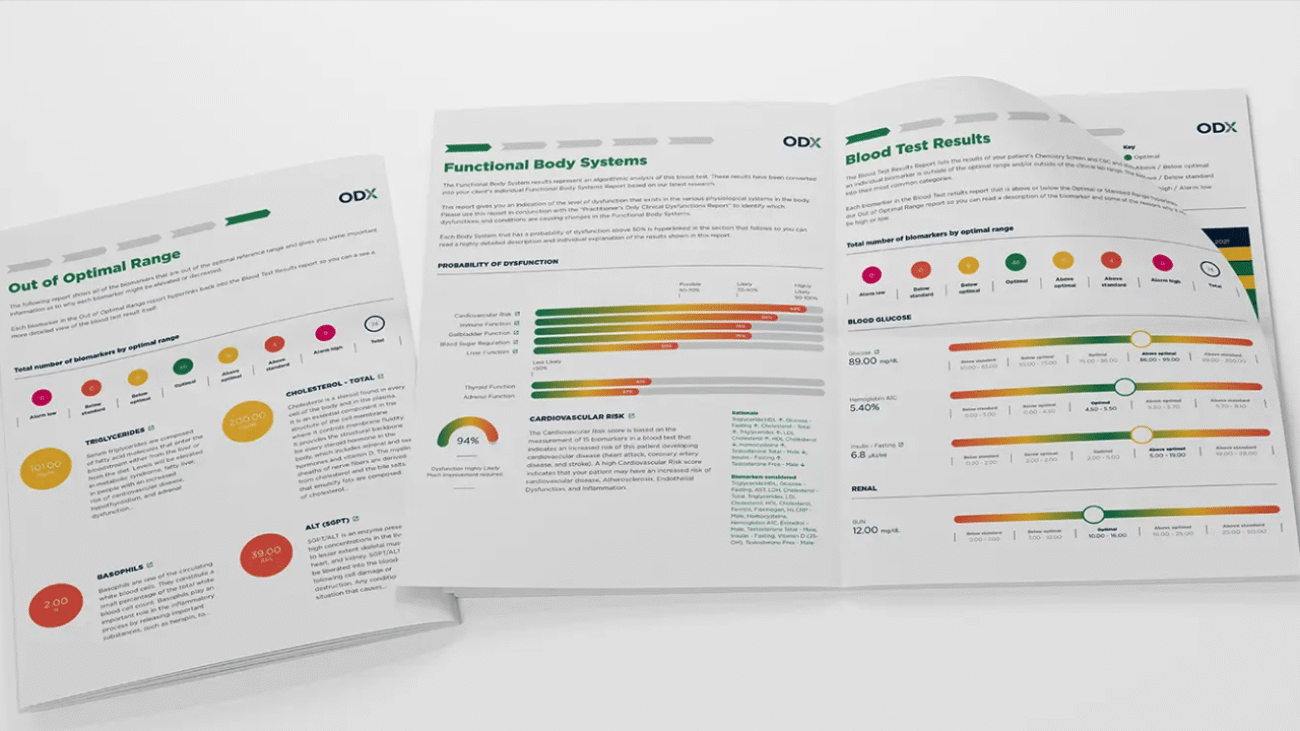
labs

Functional Lab Testing Explained: What We Look for That Others Don’t

The Difference Between “In Range” and “Optimal”

Traditional lab interpretation focuses on identifying disease.

Functional interpretation focuses on identifying dysfunction before disease develops.

For example:

  • A TSH of 3.8 may be “normal” – but many women feel symptomatic above 2.5.

  • Fasting glucose of 95 may not raise alarms – but paired with elevated insulin, it signals early metabolic strain.

  • Ferritin of 20 may be in range – but insufficient for optimal thyroid conversion and energy.

Numbers do not exist in isolation.

They exist in patterns.


Why Patterns Matter More Than Single Markers

The body compensates.

When one system weakens, another adapts to maintain stability. That compensation can keep labs technically normal for years.

We evaluate:

  • Thyroid conversion (T4 to T3)

  • Reverse T3 patterns

  • Insulin-to-glucose relationships

  • Inflammatory markers in context

  • Estrogen metabolism pathways

  • Progesterone balance

  • Cortisol rhythm (not just a single reading)

It’s not about chasing abnormalities.
It’s about recognizing strain.


The Power of Early Detection

Early metabolic dysfunction often presents as:

  • Subtle weight gain

  • Brain fog

  • Energy dips

  • Mood shifts

  • Sleep disruption

By the time disease is diagnosable, dysfunction has often been present for years.

Functional labs give us the opportunity to intervene early – when change is easier.


Personalization Over Protocol

We do not apply generic plans.

Data guides strategy:

  • Blood sugar instability → targeted nutrition timing

  • Poor thyroid conversion → nutrient + stress support

  • Elevated inflammation → gut and metabolic intervention

  • Hormone imbalance → personalized recalibration

Testing is not about creating fear.
It is about creating clarity.

And clarity creates confidence.