pexels-liza-summer-6382642

Healing the Nervous System: The Most Overlooked Key to Energy and Longevity

You Cannot Heal in Survival Mode

The nervous system determines whether your body prioritizes:

  • Repair
  • Reproduction
  • Digestion
  • Fat metabolism
  • ……or Survival

When the body perceives a threat – whether from work stress, sleep deprivation, overtraining, emotional strain, or blood sugar instability – it shifts into sympathetic dominance.

This is commonly known as fight-or-flight.

Short bursts are healthy.
Chronic activation is not.


What Chronic Stress Does to Physiology

Long-term sympathetic activation can:

  • Suppress thyroid conversion
  • Lower progesterone
  • Elevate cortisol
  • Increase insulin
  • Disrupt sleep architecture
  • Reduce digestive efficiency

This creates a cascade.

You may eat well and exercise consistently – but if the nervous system remains dysregulated, healing stalls.


Signs of Nervous System Dysregulation

  • Waking between 2-4am
  • Feeling wired but exhausted
  • Digestive inconsistency
  • Inability to lose weight despite effort
  • Anxiety paired with fatigue
  • Heightened sensitivity to stress

This is not weakness.
It is physiology protecting itself.


Regulation Is the Foundation of Longevity

Longevity is not just about supplements or biohacks.

It is about safety at the cellular level.

When the nervous system shifts into parasympathetic regulation:

  • Digestion improves
  • Hormone signaling stabilizes
  • Sleep deepens
  • Inflammation decreases
  • Energy becomes sustainable

The body heals when it feels safe.


The Integrative Approach to Regulation

At on the GLO, serving Salt Lake City and surrounding areas, nervous system work may include:

  • Sleep architecture optimization
  • Breath pattern retraining
  • Blood sugar stabilization
  • Strength-based training instead of cortisol-spiking overexertion
  • Strategic stress recovery cycles
  • Mind–body techniques

We do not separate mental stress from physical stress.

Your body doesn’t.

Healing the nervous system is not optional.
It is foundational.

pexels-mart-production-7699500

Why “Your Labs Are Normal” Is the Most Frustrating Sentence in Women’s Healthcare

When “Normal” Doesn’t Feel Normal

You’ve done the bloodwork.
You’ve waited for the call.
You’ve hoped for clarity.

Instead, you hear: “Everything looks normal.”

And yet you’re exhausted. Inflamed. Gaining weight despite eating well. Waking at 3am. Foggy. Flat. Off.

This disconnect is one of the most common frustrations we hear from women in Salt Lake City seeking integrative care.

The truth is: “normal” and “optimal” are not the same thing.


How Conventional Lab Ranges Are Created

Standard laboratory reference ranges are based on statistical averages. They reflect where 95% of the population falls — not where people thrive.

That means:

  • If a large portion of the population is metabolically unhealthy, the “normal” range shifts accordingly.

  • Early dysfunction can exist for years before it crosses into diagnosable disease.

  • Symptoms often appear long before lab markers reach a red flag threshold.

Traditional medicine is designed to detect pathology.
Integrative medicine is designed to detect imbalance.

That distinction changes everything.


The Subclinical Gray Zone

Many women live in what we call the functional gray zone — not sick enough for a diagnosis, but not well enough to feel vibrant.

Examples include:

  • Thyroid markers technically in range but not optimal

  • Elevated fasting insulin despite normal glucose

  • Progesterone declining years before menopause

  • Chronic low-grade inflammation that never triggers a disease code

These patterns don’t always generate prescriptions.
But they absolutely generate symptoms.


The Integrative Difference

At on the GLO, we look beyond single numbers. We assess:

  • Trends over time

  • Marker relationships

  • Optimal ranges rather than broad averages

  • How labs align with your lived experience

Your symptoms are data.
Your body is communicating.

Instead of asking, “Is this normal?” we ask:

  • What system is under stress?

  • What’s compensating?

  • What happens if we intervene now instead of five years from now?


Why This Matters for Long-Term Health

When early imbalances are addressed:

  • Energy stabilizes

  • Weight regulation improves

  • Sleep deepens

  • Brain clarity returns

  • Inflammation decreases

And perhaps most importantly — women stop feeling dismissed.

You deserve more than reassurance.
You deserve time, attention and answers.

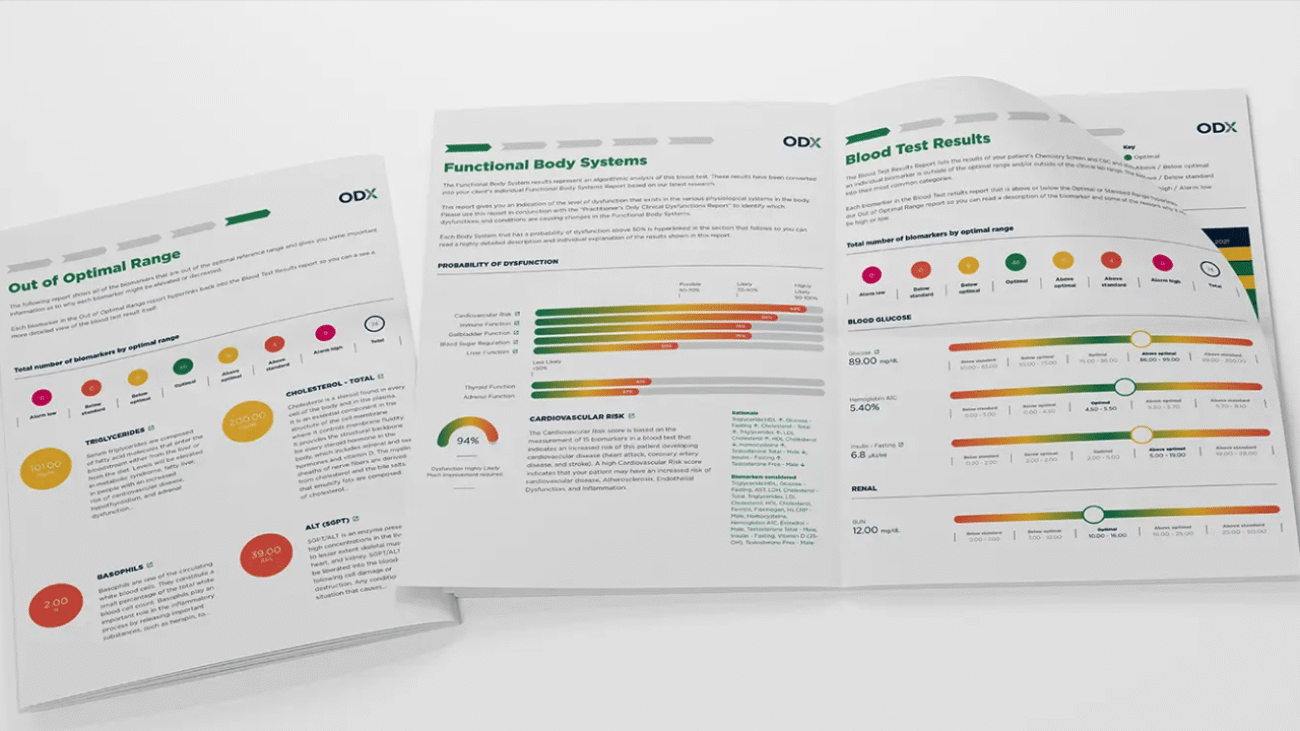
labs

Functional Lab Testing Explained: What We Look for That Others Don’t

The Difference Between “In Range” and “Optimal”

Traditional lab interpretation focuses on identifying disease.

Functional interpretation focuses on identifying dysfunction before disease develops.

For example:

  • A TSH of 3.8 may be “normal” – but many women feel symptomatic above 2.5.

  • Fasting glucose of 95 may not raise alarms – but paired with elevated insulin, it signals early metabolic strain.

  • Ferritin of 20 may be in range – but insufficient for optimal thyroid conversion and energy.

Numbers do not exist in isolation.

They exist in patterns.


Why Patterns Matter More Than Single Markers

The body compensates.

When one system weakens, another adapts to maintain stability. That compensation can keep labs technically normal for years.

We evaluate:

  • Thyroid conversion (T4 to T3)

  • Reverse T3 patterns

  • Insulin-to-glucose relationships

  • Inflammatory markers in context

  • Estrogen metabolism pathways

  • Progesterone balance

  • Cortisol rhythm (not just a single reading)

It’s not about chasing abnormalities.
It’s about recognizing strain.


The Power of Early Detection

Early metabolic dysfunction often presents as:

  • Subtle weight gain

  • Brain fog

  • Energy dips

  • Mood shifts

  • Sleep disruption

By the time disease is diagnosable, dysfunction has often been present for years.

Functional labs give us the opportunity to intervene early – when change is easier.


Personalization Over Protocol

We do not apply generic plans.

Data guides strategy:

  • Blood sugar instability → targeted nutrition timing

  • Poor thyroid conversion → nutrient + stress support

  • Elevated inflammation → gut and metabolic intervention

  • Hormone imbalance → personalized recalibration

Testing is not about creating fear.
It is about creating clarity.

And clarity creates confidence.

pexels-pavel-danilyuk-7801344

Hormones 101: Why You’re Tired, Inflamed, and Gaining Weight (Even If You Eat Clean)

Hormones Are Messengers – Not Villains

Hormones are biochemical signals. They tell your body when to:

  • Burn fuel

  • Store fat

  • Sleep

  • Ovulate

  • Repair tissue

  • Stay alert

  • Calm down

When messaging is clear, the body runs efficiently.

When signaling becomes erratic, symptoms follow.


The Core Hormones That Shape How You Feel

Insulin

Regulates blood sugar and fat storage. Chronically elevated insulin drives inflammation and weight gain – especially in the midsection.

Cortisol

Your stress hormone. Necessary in bursts. Harmful when chronically elevated or dysregulated.

Thyroid Hormones

Control metabolic speed. Even subtle inefficiencies can lead to fatigue, hair thinning, and weight resistance.

Estrogen + Progesterone

Influence mood, sleep, fat distribution, and skin quality. Imbalances often begin in the late 30s.

When one shifts, others compensate. The endocrine system is interconnected.


Why “Eating Clean” Sometimes Isn’t Enough

You can:

  • Avoid processed foods

  • Exercise consistently

  • Drink water

  • Sleep reasonably well

And still feel off.

Because hormones respond not just to food – but to stress load, sleep depth, blood sugar timing, inflammation, and nervous system tone.

The body does not separate mental stress from physical stress.

If cortisol rises, insulin shifts.
If insulin shifts, estrogen signaling changes.
If estrogen fluctuates, sleep destabilizes.

It’s a cascade.


Signs Your Hormones May Be Shifting

  • Waking between 2-4am

  • New belly weight

  • Shorter cycles

  • Heavier periods

  • Irritability without cause

  • Afternoon energy crashes

  • Brain fog

These are not personality changes.
They are physiology speaking.


A Smarter Hormone Strategy

At on the GLO, we evaluate:

  • Full thyroid panels (not just TSH)

  • Fasting insulin and glucose patterns

  • Cortisol rhythm

  • Estrogen and progesterone balance

  • Inflammatory markers

Hormones rarely need suppression.
They need recalibration.

When signaling stabilizes, the body becomes cooperative again.

8W0A6171

Root Cause vs. Symptom Management: Why Quick Fixes Keep You Stuck

The Culture of Quick Relief

We live in a culture that rewards speed.

Headache? Take something.
Weight gain? Restrict harder.
Fatigue? Increase caffeine.
Anxiety? Power through.

Short-term relief is seductive.

But suppression is not resolution.


The Cost of Managing Symptoms

When symptoms are silenced without investigating the source:

  • Inflammation progresses quietly

  • Hormones compensate and eventually destabilize

  • Metabolic dysfunction deepens

  • Energy declines further

The body keeps score.

Symptoms are not inconveniences.
They are signals.


What Root-Cause Medicine Actually Means

Root-cause medicine does not mean guessing.
It means investigating.

We ask:

  • Is blood sugar fluctuating throughout the day?

  • Is cortisol dysregulated?

  • Is thyroid conversion impaired?

  • Is estrogen clearance inefficient?

  • Is chronic inflammation driving fatigue?

Each symptom has upstream drivers.

When those drivers are addressed, the symptom often resolves naturally.


A Practical Example: Stubborn Weight Gain

Symptom approach:

  • Calorie restriction

  • Increased cardio

  • Appetite suppressants

Root-cause approach:

  • Evaluate fasting insulin

  • Assess cortisol rhythm

  • Review sleep patterns

  • Analyze thyroid function

  • Stabilize blood sugar

One approach fights the body.
The other works with it.


Sustainable Healing Is Slower and Stronger

Quick fixes create cycles.
Root-cause correction creates stability.

Women don’t need more discipline.
They need deeper data.

And when physiology stabilizes, the body becomes cooperative again.

pexels-karola-g-5240604

Why Your Skin Mirrors Your Metabolism

Your Skin Is Not Just Cosmetic – It’s Metabolic

Skin is often treated as a surface-level concern.

But biologically, your skin is one of your most metabolically active organs. It reflects inflammation levels, hormonal signaling, blood sugar regulation, nutrient status, and stress load.

When women experience:

  • Adult acne

  • Rosacea flares

  • Hyperpigmentation

  • Dullness

  • Accelerated aging

  • Slow healing

The issue is rarely “just skincare.”

It is physiology expressing itself externally.


The Blood Sugar-Collagen Connection

One of the most overlooked drivers of premature aging is glycation.

When blood sugar is chronically elevated, glucose molecules bind to collagen and elastin fibers. This process makes them stiff, brittle, and less elastic.

The result?

  • Fine lines deepen

  • Skin loses bounce

  • Texture becomes uneven

  • Healing slows

Even women who are not diabetic can experience glycation if insulin is chronically elevated.

Metabolic strain accelerates visible aging.


Cortisol and Collagen Breakdown

Chronic stress elevates cortisol. Elevated cortisol:

  • Breaks down collagen

  • Increases inflammation

  • Slows wound healing

  • Disrupts barrier function

You can inject collagen stimulators – but if cortisol remains high, breakdown continues internally.

Aesthetic results are temporary if metabolic stress is chronic.


Hormones and Skin Architecture

Estrogen plays a direct role in:

  • Collagen production

  • Skin thickness

  • Hydration

  • Elasticity

During perimenopause, fluctuating estrogen contributes to:

  • Thinner skin

  • Increased dryness

  • Loss of volume

  • Heightened sensitivity

This is not simply “aging.”
It is endocrine transition.


The Gut-Skin Axis

Inflammation often begins in the digestive tract.

Gut permeability and microbiome imbalance can contribute to:

  • Acne

  • Eczema

  • Rosacea

  • Chronic inflammation

If the immune system is activated internally, skin often becomes reactive externally.

Topicals alone rarely solve inflammatory skin conditions.


The Integrative Aesthetic Approach

At on the GLO, we combine aesthetic treatment with metabolic insight.

That means:

  • Assessing insulin patterns

  • Evaluating inflammatory markers

  • Reviewing hormone transitions

  • Supporting collagen internally through nutrition and stress regulation

  • Pairing internal optimization with external treatments

When metabolism stabilizes:

  • Puffiness decreases

  • Tone improves

  • Texture refines

  • Results last longer

Radiance is systemic.

True aesthetic longevity is internal first, external second.